Start with movementUnderstand who uses the route, when and why.
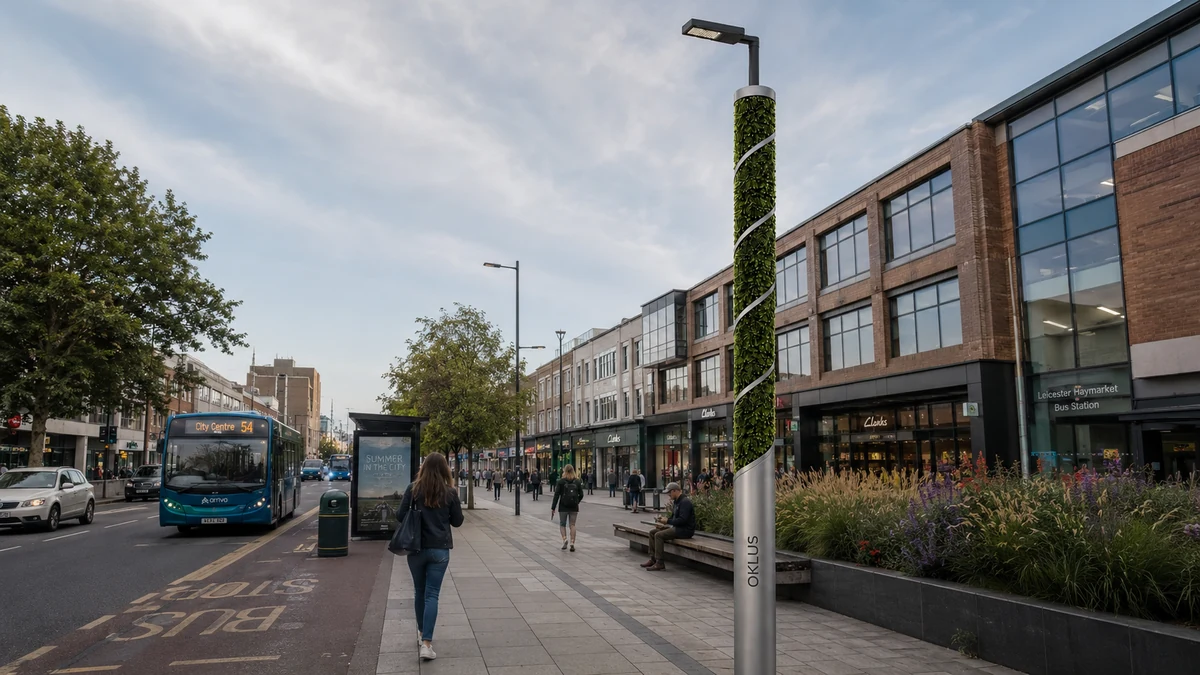
THE CLEANER ROUTE
Environmental infrastructure, planned as a route.
OKLUS is developing a route-based approach that helps councils explore how retrofit units, living media, maintenance and evidence can work together across the places people use every day.
Design for contextMatch locations, access and living media to the street.
Learn as a networkCompare sites, service records and public observations.
FROM SINGLE ASSET TO PUBLIC ROUTE
A connected civic proposition. Visible from one journey to the next.
A single installation can begin a conversation. A carefully chosen route can create a stronger test of public value, operations and repeatability.
The Cleaner Route gives councils and delivery partners a practical structure for choosing sites, setting questions, planning maintenance and understanding whether a wider network case is emerging.
WHY ROUTES MATTER
Public infrastructure is experienced as a journey, not a spreadsheet.
People notice the school gate, the bus stop, the park entrance, the high street and the path home as one connected experience.
A route approach helps pilot teams consider how installations relate to footfall, traffic, shade, planting conditions, service access and the wider identity of a place. It also creates a clearer commercial conversation about density, logistics and repeat deployment.
More meaningful site selectionChoose locations because they answer a question, not simply because space is available.
More efficient service planningClustered assets can support practical inspection and maintenance rounds.
More useful evidenceCompare different conditions while keeping one shared pilot framework.

ROUTE LENSMovement, environment and public experience
DELIVERY LENSAccess, maintenance and repeatability
ONE PLATFORM, DIFFERENT PUBLIC SETTINGS
Designed to respond to the route around it.

SCHOOL AND COMMUNITY ROUTES
Visible where daily journeys begin.
Explore safer, greener and more engaging approaches around schools and neighbourhood links.

ACTIVE TRAVEL
Infrastructure that follows movement.
Connect walking, cycling and running corridors with visible environmental design and route learning.

HIGH STREETS
A premium civic presence in busy places.
Test how retrofit infrastructure can contribute to public realm quality without becoming visual clutter.

PARKS AND GREEN LINKS
Living systems connected to public assets.
Consider biodiversity, shade, seasonal performance and public interpretation in calmer routes.
THE ROUTE PILOT FRAMEWORK
Six decisions turn a location into a structured pilot.
A strong route starts with agreed questions and responsibilities. The framework below is designed to help councils, partners and investors see how local delivery could become a repeatable operating model.
Choose the route purpose
Set the local challenge, intended users and reasons for testing OKLUS in this place.
Understand the corridor
Review existing assets, movement patterns, constraints, shade, access and nearby uses.
Choose comparison sites
Create a useful mix of locations rather than repeating the same condition.
Agree delivery roles
Confirm surveys, permissions, installation, inspection, care, records and escalation routes.
Capture route evidence
Combine operational records, observations, environmental context and community feedback.
Refine or repeat
Use the findings to improve the product, route density, service model and next investment case.

FROM PILOT MAP TO PORTFOLIO VIEW
Route intelligence can strengthen the business case.
The long-term opportunity is not simply the number of units installed. It is the quality of the repeatable system around them.
Site pipeline
A clearer view of suitable locations, permissions and delivery readiness.
Service density
Better understanding of inspection rounds, travel time and maintenance cost drivers.
Comparable evidence
A consistent route framework that supports learning across different contexts.
Repeatable procurement
A pathway from one pilot towards defined packages, responsibilities and reporting.
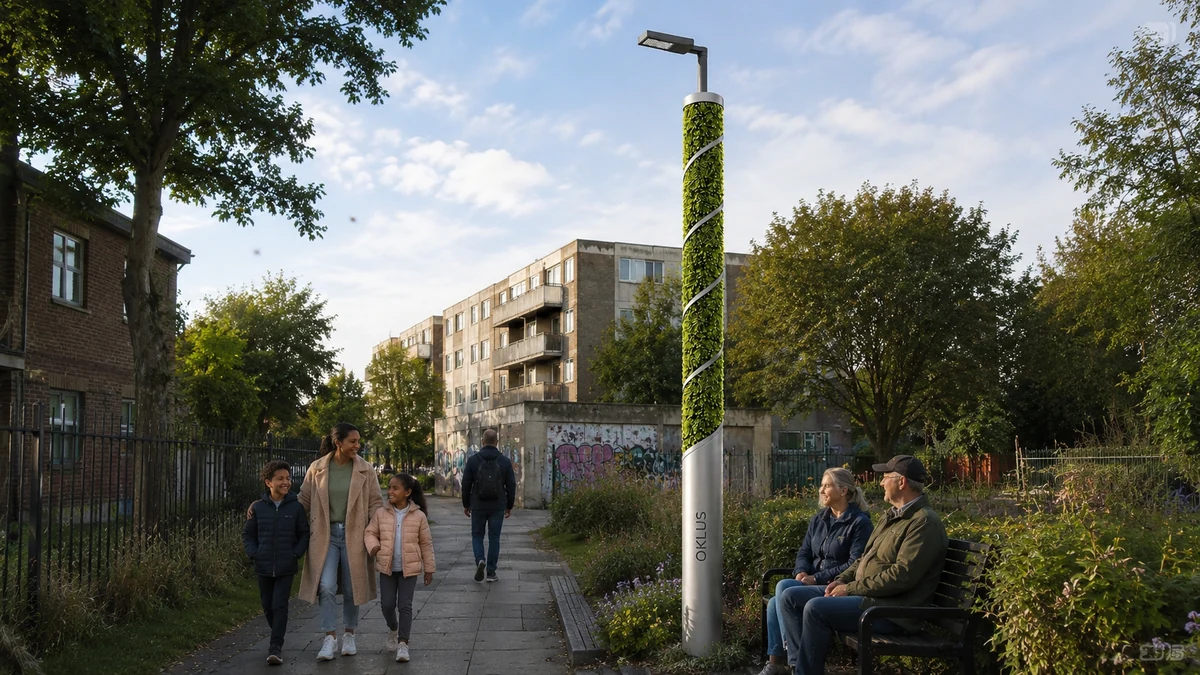
THE PUBLIC EXPERIENCE
“A route should feel more considered because OKLUS is there, not more complicated.”
A guiding design principle for pilot planning, product placement and public communication.
THE INVESTOR AND DELIVERY VIEW
A route creates several layers of value to validate.
Each layer needs evidence. The purpose of early pilots is to identify which parts of the proposition are strongest, which need redesign and what a credible route to scale would require.
Retrofit units integrated into existing street assets.
Product configuration, manufacture, installation and durability form the visible core of the proposition.
Inspection, care and maintenance
Planned operational support can become a recurring and measurable part of delivery.
Site, service and pilot records
Structured information can help councils and partners make better continuation decisions.
Specialist delivery capability
Installation, living media, materials and evaluation can be strengthened through expert partners.
Visibility, learning and place identity
The route can support environmental engagement when communication remains honest and useful.
CURRENT ROUTE POSITION
Built for structured discussion, then tested in real places.
The route settings and network shown are development concepts. Site suitability, permissions, highways requirements, product configuration, planting and evidence methods will be agreed for each pilot.
Current stageRoute concept, visual development and council or partner conversations
Initial useSmall, structured pilots with a clear local purpose and defined review points
Route variablesAsset type, location conditions, footfall, traffic, access, living media and maintenance
Evidence principleRecord operational reality and public context without overstating environmental outcomes
Scale decisionProceed only when product, service, governance and commercial learning support the next step