Planetary defence
Explore asteroids, impact risk and the science used to protect Earth.

EDUCATION
OKLUS connects engineering, environmental science and local place-making through practical learning experiences designed around the public realm pupils already know.
A LIVING CLASSROOM OUTSIDE THE SCHOOL GATES
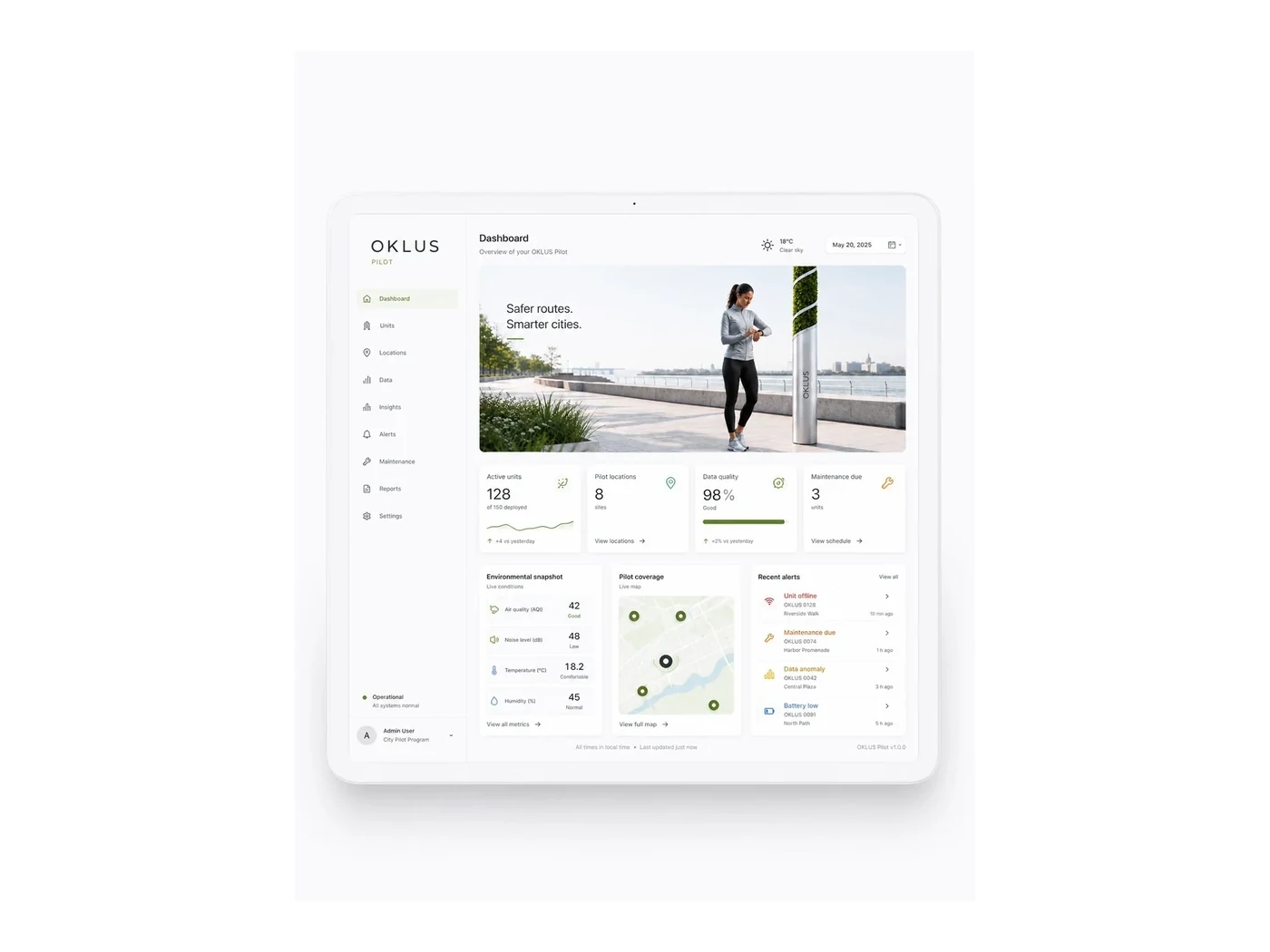
A future school view of OKLUS Insights could give teachers and pupils access to age-appropriate environmental observations from the routes they use every day.
Schools could explore air-quality context, temperature, humidity, weather, seasonal planting, pollinator activity, habitat observations and maintenance records. The purpose is to connect engineering, ecology and data with the real environment immediately outside the school.
FUTURE HABITAT IMAGING CONCEPT
Carefully designed internal imaging could eventually support ecological learning and research. Any concept would require ecological, safeguarding, privacy and technical review before use.
MISSION EARTH
The first OKLUS learning programme invites pupils to investigate how science and engineering can protect people, places and the planet. It combines classroom thinking with the curiosity of a mission.
Explore asteroids, impact risk and the science used to protect Earth.
Investigate movement, energy transfer and the forces acting on engineered systems.
Understand how materials, structures and systems must perform in extreme environments.
Build questions, gather evidence, test ideas and explain what the results can support.
Define a problem, create concepts, refine a solution and justify design choices.
Work together, challenge assumptions and present a clear mission recommendation.
THE CLASSROOM PACK
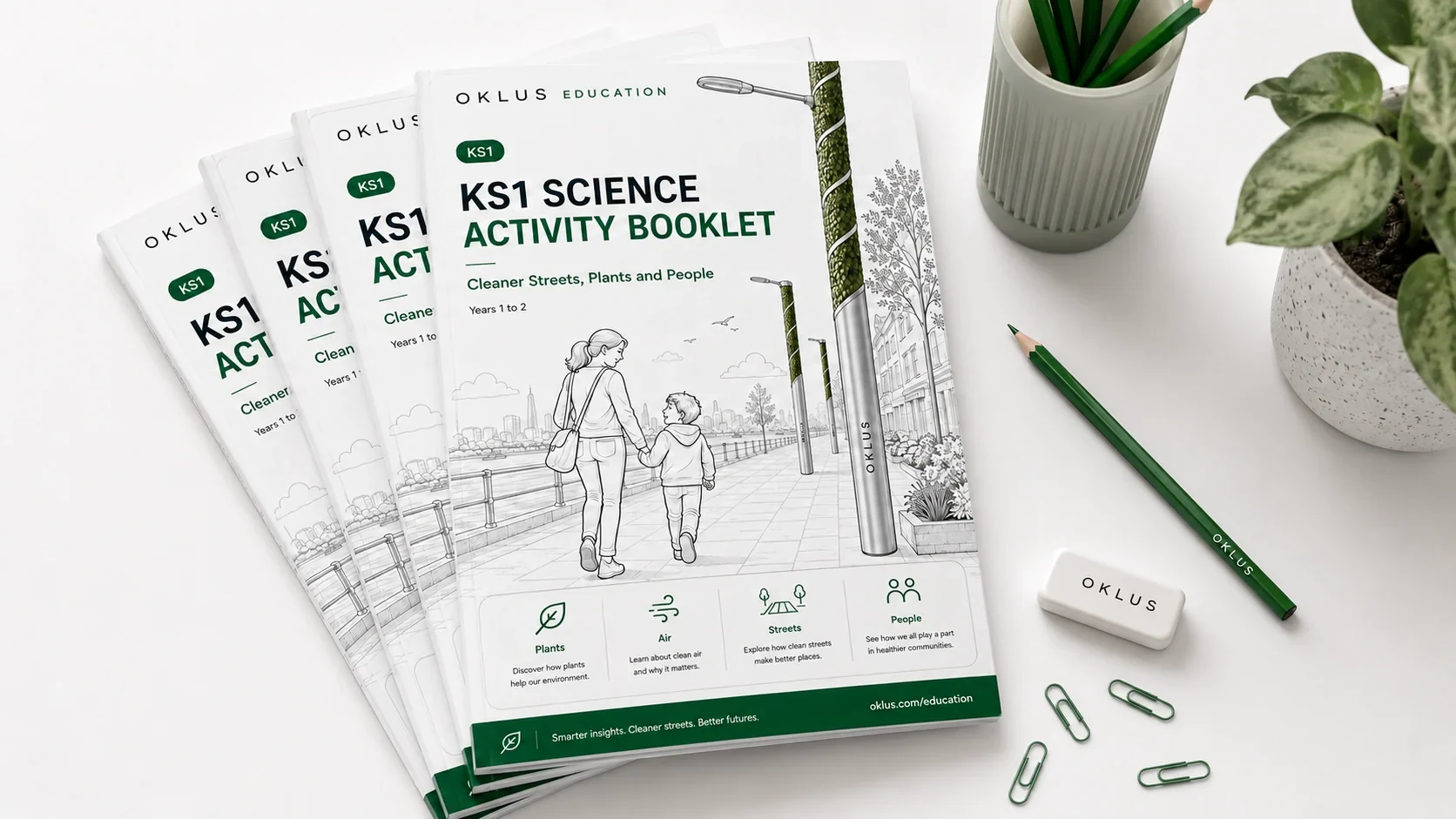
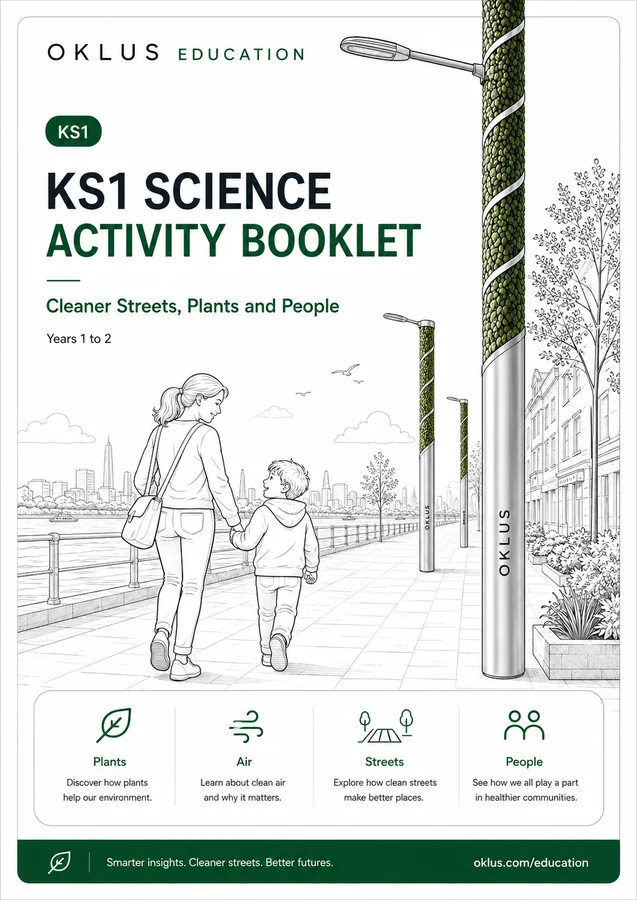
A coherent visual system helps teachers introduce complex topics with confidence and gives pupils a mission they want to complete.
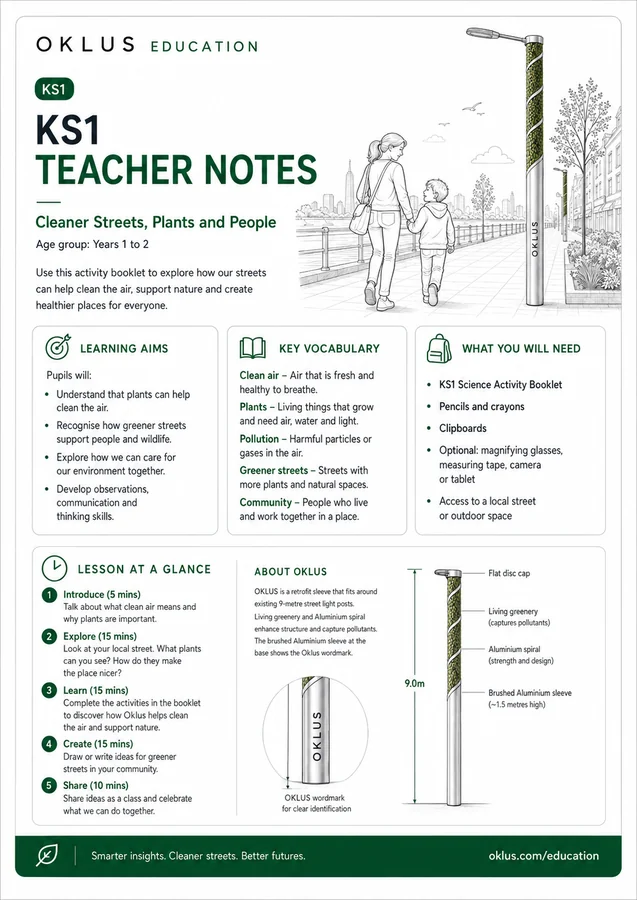
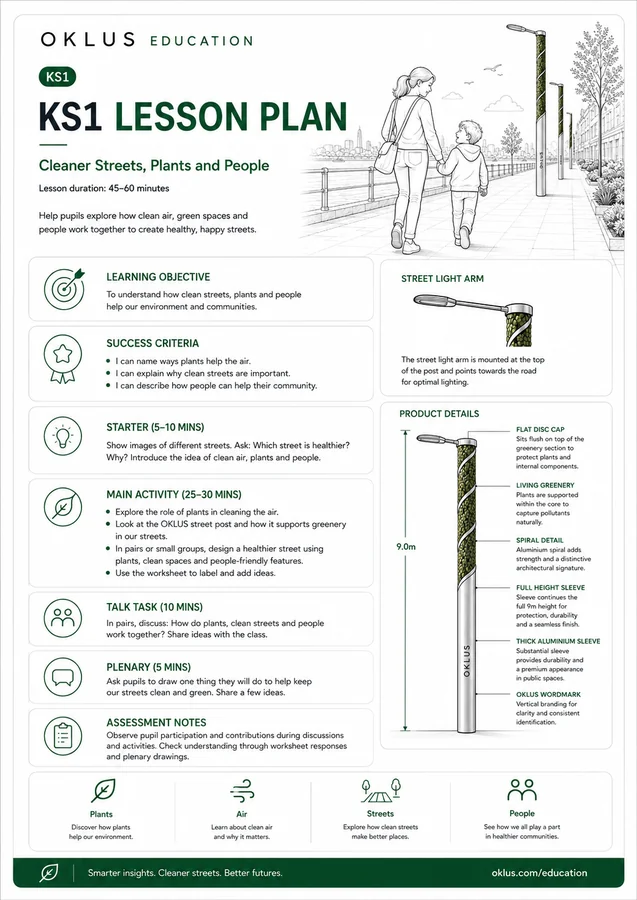
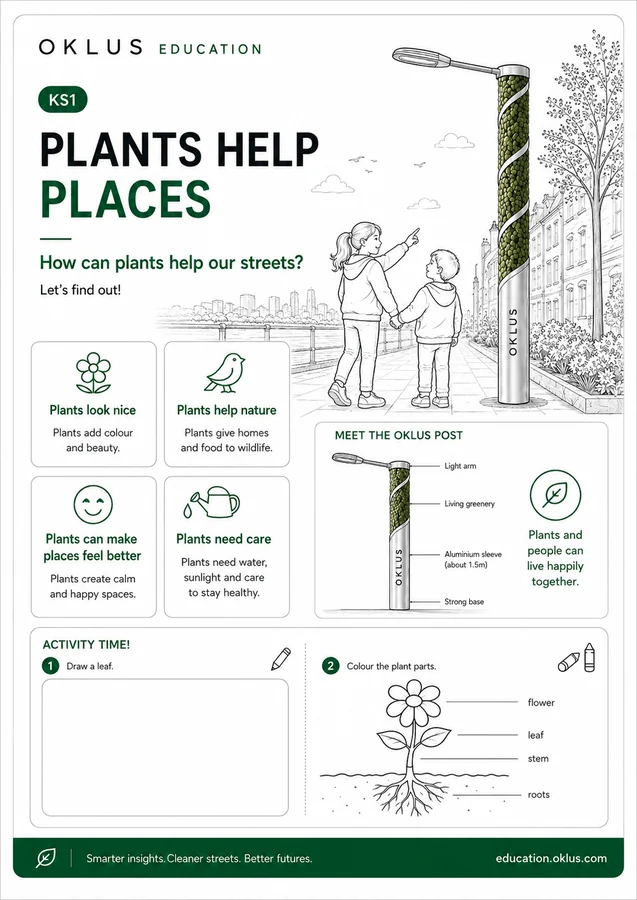
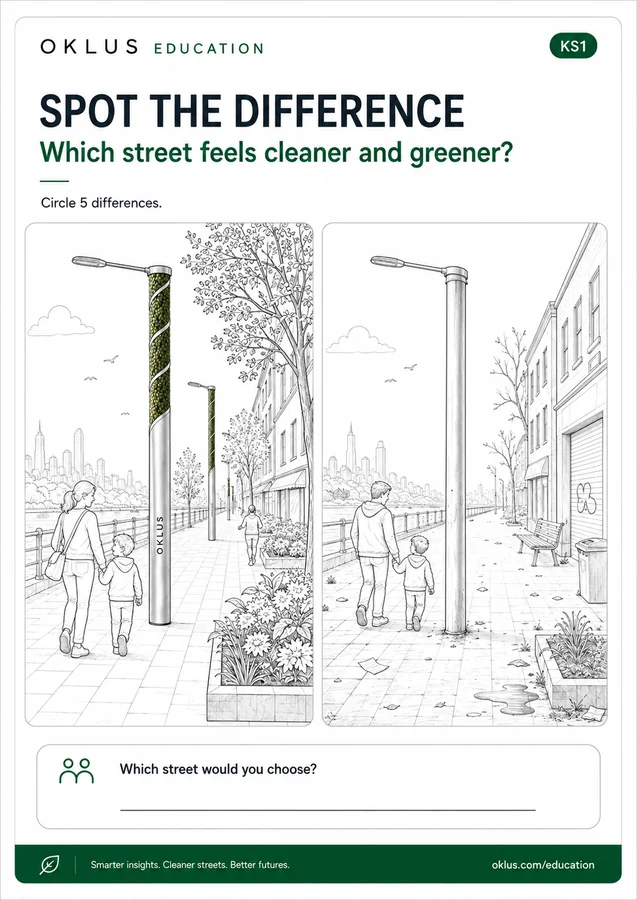
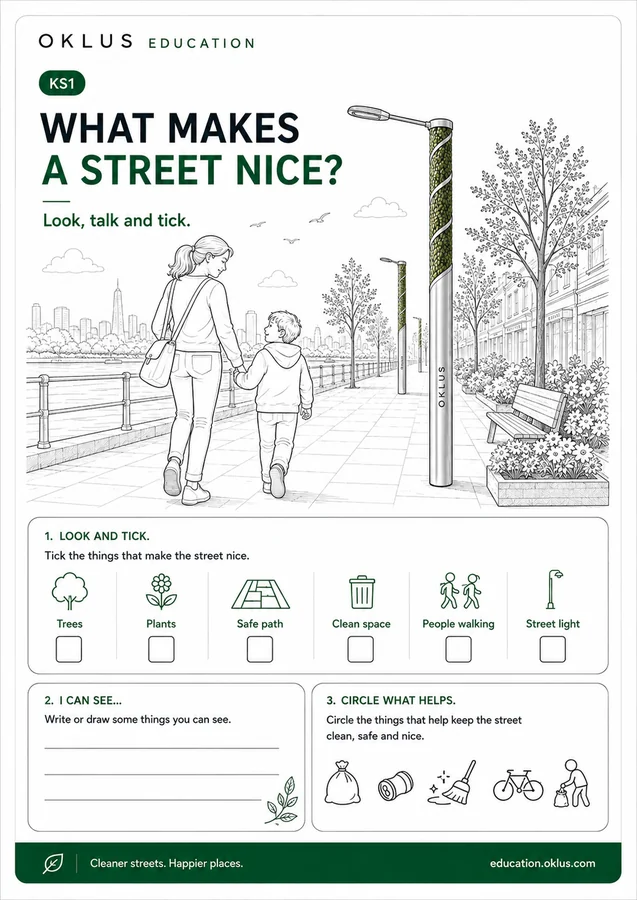
Each programme can combine a student booklet, teacher notes, structured activities, visual prompts and optional local-route tasks. The format is designed to be flexible enough for lessons, enrichment days or a wider school partnership.
FROM CLASSROOM TO COMMUNITY
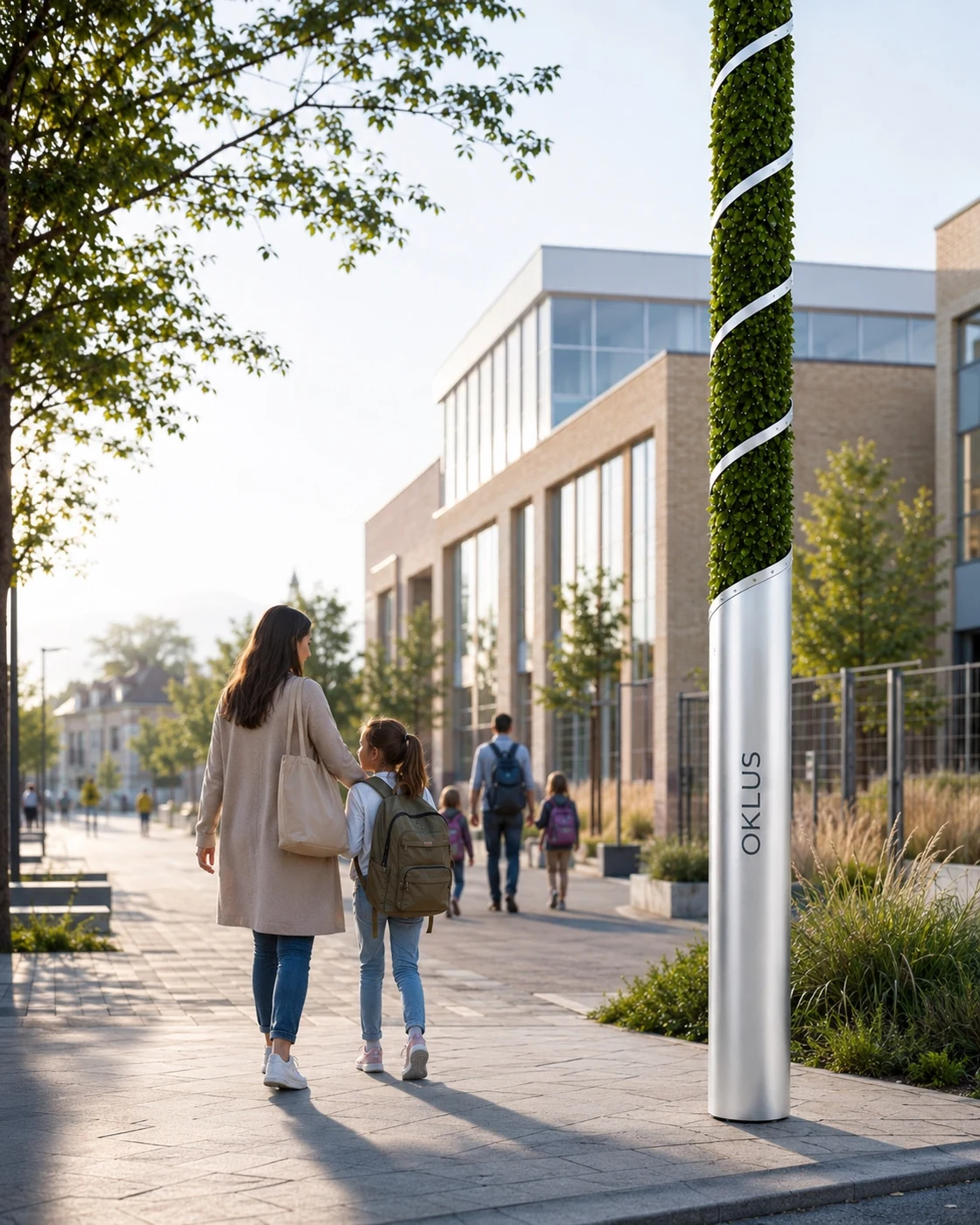
When a pupil can see the route, the lamp post, the planting and the people using the space, science becomes connected to decisions made in the real world.
MISSION EARTH: POLLINATOR ROUTES
Future learning activities could help pupils investigate pollination, insect decline, habitat fragmentation and environmental monitoring while understanding that good ecological ideas still need testing.
Explore why different pollinators matter and why one habitat cannot suit every species.
Map parks, verges, gardens, waterways and the gaps between existing habitats.
Consider materials, shelter, drainage, maintenance and responsible design constraints.
Compare temperature, humidity, light and seasonal observations across locations.
Ask how different habitat approaches could be tested fairly without assuming the answer.
Record observations responsibly without opening or handling occupied habitat modules.
THE OKLUS ENGINEERING ACADEMY
Pupils are invited to think like scientists, engineers, designers and public decision-makers, while understanding that strong ideas still need evidence, maintenance and community trust.
Study the place, users and environmental question before proposing a solution.
Gather observations, compare information and identify what is still unknown.
Generate ideas, choose materials and explain how the concept would work.
Consider limitations, maintenance, cost, accessibility and unintended effects.
Present a recommendation that is clear about both potential and uncertainty.
A FLEXIBLE RESOURCE LIBRARY
Resources can support whole-class teaching, independent activities, group projects and community-facing exhibitions.


A SHARED CIVIC OPPORTUNITY
A structured education strand can help councils explain local environmental projects, invite thoughtful participation and build long-term interest in engineering and public service.
Real local challenges, high-quality materials and visible links to future careers.
A constructive way to share pilot purpose, limitations and community value.
Opportunities to contribute expertise, demonstrations and authentic project insight.
Pupils can examine the places they use and communicate considered improvement ideas.
CURRENT PROGRAMME POSITION
The education resources shown are development concepts. Programme content, age range, safeguarding arrangements, delivery format and curriculum alignment will be agreed with participating schools and partners before use.