Explore additional environmental value from suitable assets already embedded in streets.

URBAN BIODIVERSITY
Reconnecting nature through everyday streets.
OKLUS is exploring how suitable existing street infrastructure could support small, evidence-led habitat interventions for urban pollinators and beneficial invertebrates, alongside the wider cleaner-air proposition.
Investigate whether selected units can help connect fragmented pockets of urban nature.
Species, location, lighting and surrounding habitat guide every biodiversity decision.
Test, measure, learn and improve before making wider ecological claims.
FROM GENERAL BIODIVERSITY TO SPECIES-LED RESEARCH
A new Species Recovery Network research concept.
The OKLUS Species Recovery Network explores how selected installations could be configured around a locally identified species, pollinator group or habitat need.
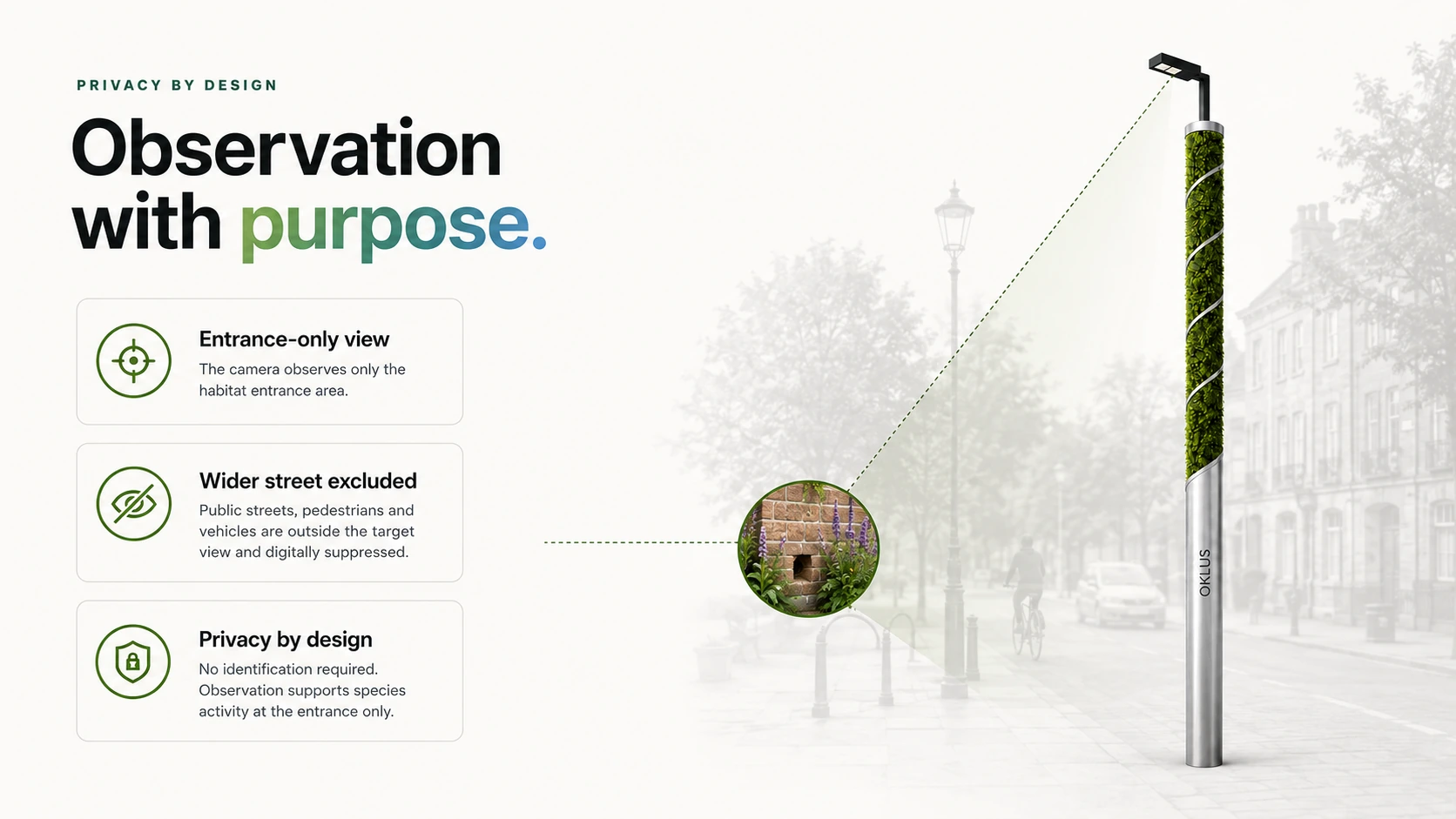
The first proposed research concept is the OKLUS Wild Bee Observatory, combining discreet serviceable habitat, environmental sensors and non-invasive activity monitoring within the finished OKLUS product form.
Explore the Species Recovery Network
MEASURED MICROHABITATS
Designed around insect biology, not decoration.
External research is now helping define the physical habitat questions future OKLUS biodiversity pilots should measure, including cavity temperature, humidity, solar exposure, orientation and artificial light.
Internal habitat conditionsDark Habitat ZoneControl and comparison sitesFrom occupancy to emergence
Explore the research approach →
BIODIVERSITY, BUILT IN
Visible planting. Discreet habitat. Serious civic infrastructure.
The biodiversity capability is intended to sit quietly within the established OKLUS form.
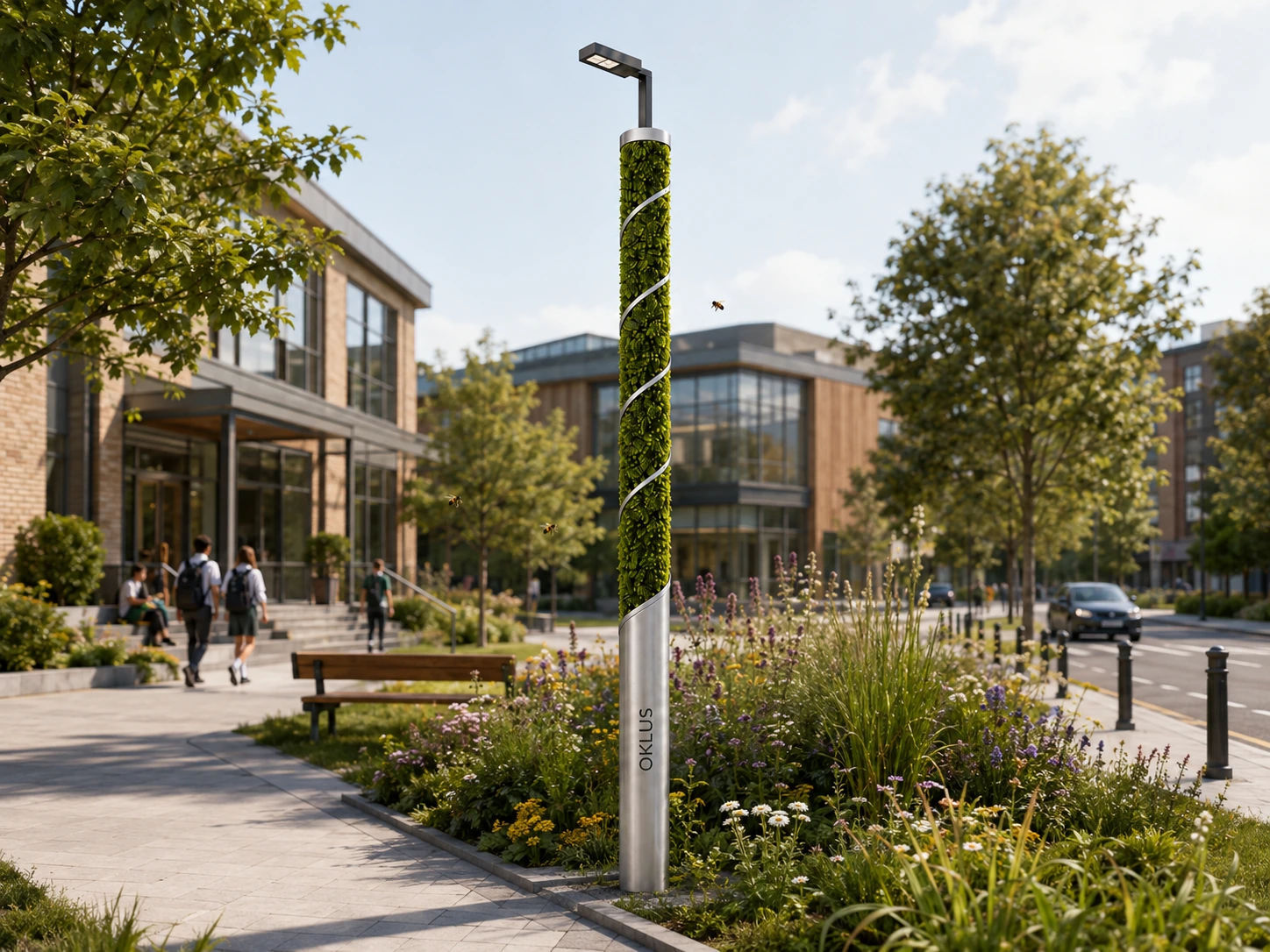
Concept visuals focus on planting and ecological context rather than revealing internal engineering. Any habitat access, geometry and material specification will remain subject to specialist development and testing.


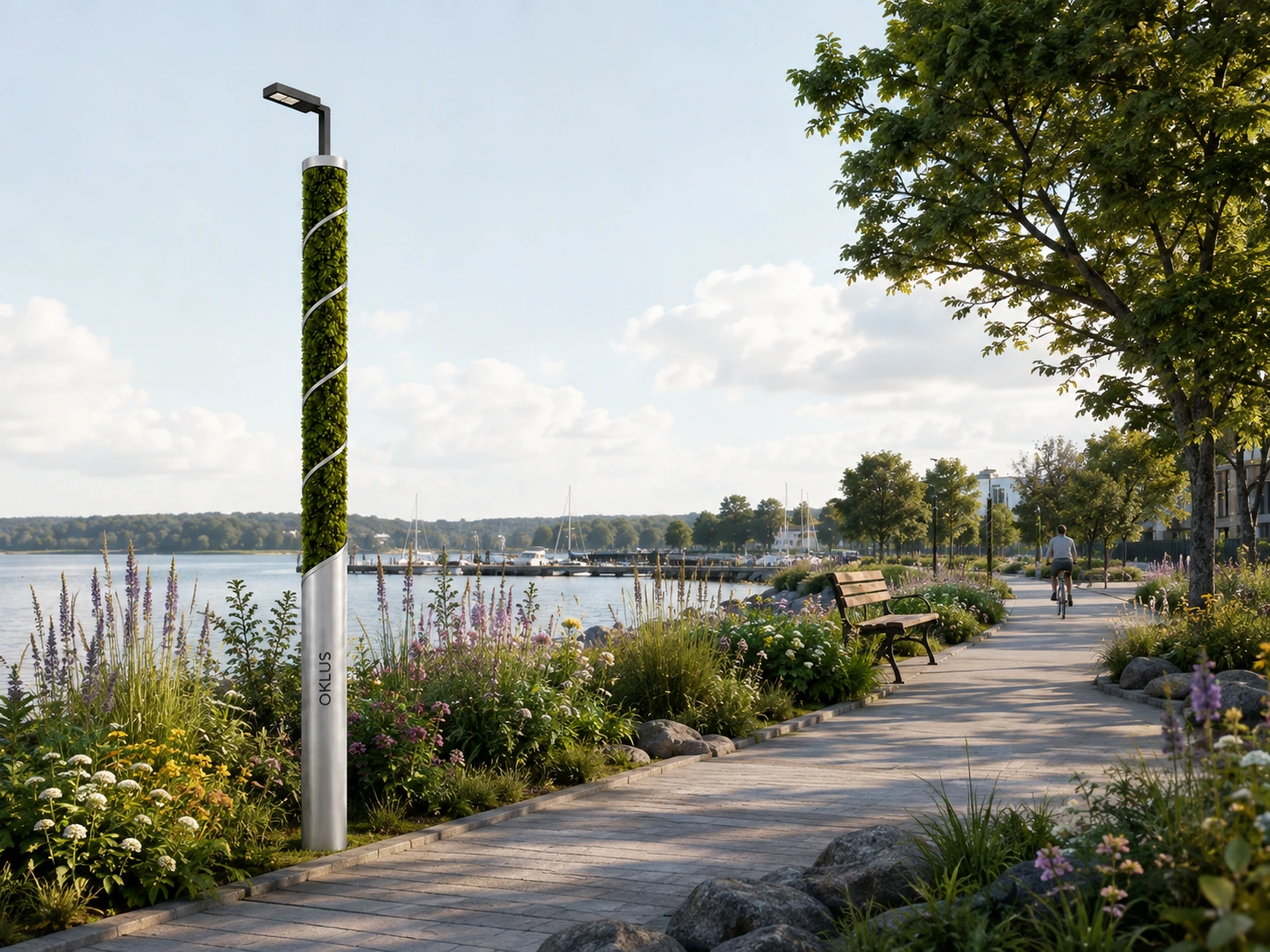
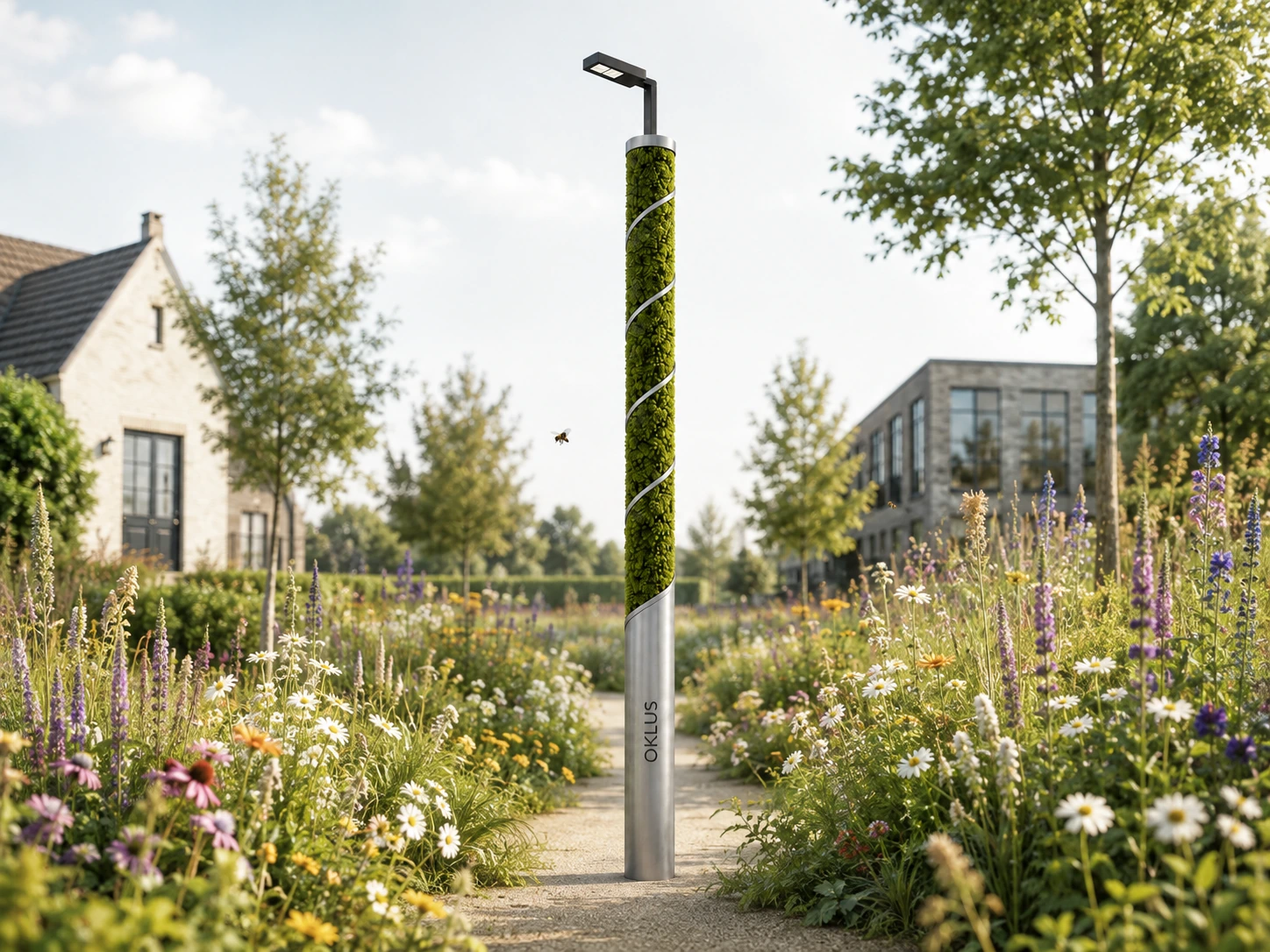
OKLUS URBAN INSECT CORRIDOR
Connecting pockets of urban nature.
Nature in towns and cities is often fragmented. Parks, gardens, verges, waterways and wildflower areas can sit close together without being well connected.
OKLUS is exploring whether carefully selected street infrastructure could provide small intermediate habitat points between those areas. The hypothesis is not that every lamp post becomes habitat. It is that a repeatable network of suitable locations may give researchers a new way to study urban ecological connectivity.
Existing street infrastructure could provide a ready-made framework for creating repeatable urban biodiversity stepping stones, subject to ecology, asset, lighting and public-realm review.

BIODIVERSITY HABITAT MODULE
A protected habitat capability, not a decorative bug hotel.
Selected OKLUS units could incorporate discreet habitat zones within protected parts of the sleeve or living-media assembly.
Exact internal geometry, materials, access and species requirements remain under development and are intentionally not presented as final engineering.

Minimal visual impact
Habitat features can be developed behind the established civic form rather than bolted onto the outside.
Different questions, different modules
Locations may require different habitat approaches, cavity characteristics, materials or no habitat module at all.
Designed around maintenance
Condition, ecological observations and servicing requirements should form part of the pilot plan.
Species suitability comes first
Specialist advice should determine target groups, safe siting, seasonal interventions and removal rules.
BEYOND BEES
Designed to explore habitat opportunities for urban pollinators and beneficial invertebrates.
The programme should not be reduced to honeybees or one standard nesting design.
Potential research may consider solitary bees, hoverflies, beetles, lacewings, ladybirds and other suitable invertebrate groups. Bumblebees, moths and other pollinators may be supported more through planting and wider route context than through the same habitat geometry.
No single module should be described as suitable for every species.
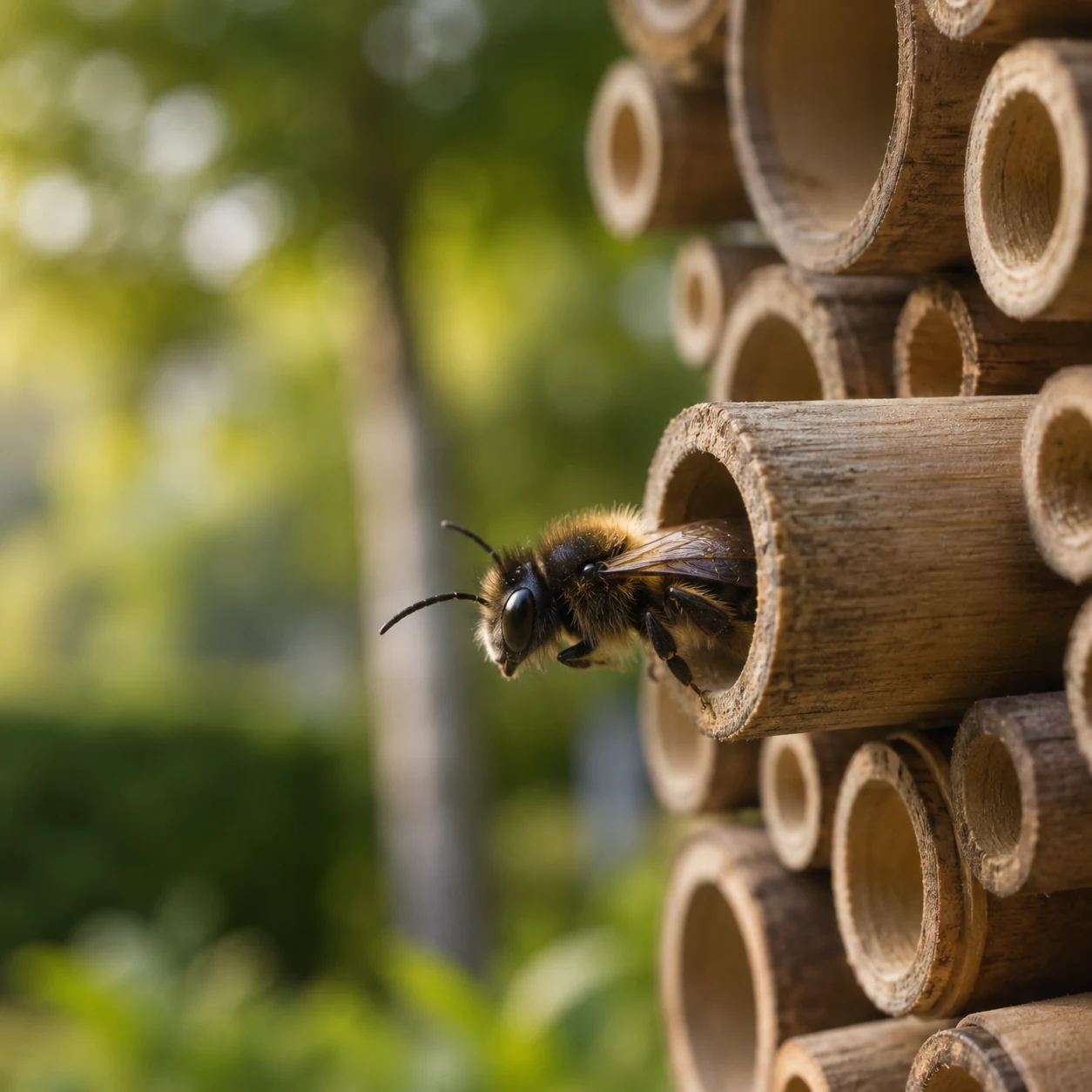
Nesting opportunities only where the site, design and ecological review support them.
Planting and habitat research can consider appropriate life-stage requirements.
Refuge and overwintering questions may require different protected habitat characteristics.
Forage, planting, season, habitat connectivity and lighting can matter as much as the module itself.
LIGHTING AND ECOLOGICAL SUITABILITY
Not every illuminated column should become habitat.
Artificial lighting can affect insects, particularly nocturnal species. Habitat design and placement would therefore be guided by ecological evidence, local conditions and the characteristics of the lighting environment.
DESIGNED TO BE TESTED
Test. Measure. Learn. Improve.
OKLUS is developing the biodiversity capability as a research-led concept.
Different habitat approaches, locations and environmental conditions could be compared with appropriate control sites to understand what genuinely works and what should change.
Habitat use
Occupancy, nesting or refuge observations and reliably identified insect groups.
Microclimate
Temperature, humidity, moisture and seasonal conditions around the habitat zone.
Design variables
Geometry, material choice, internal texture and replaceable habitat approaches.
Route context
Planting, pollution, lighting, surrounding habitat and distance between candidate nodes.
Maintenance reality
Inspection needs, blockage, damage, cleaning limits, seasonal safeguards and replacement.
Controls and limitations
Neutral and negative results remain part of the evidence and should be reported openly.
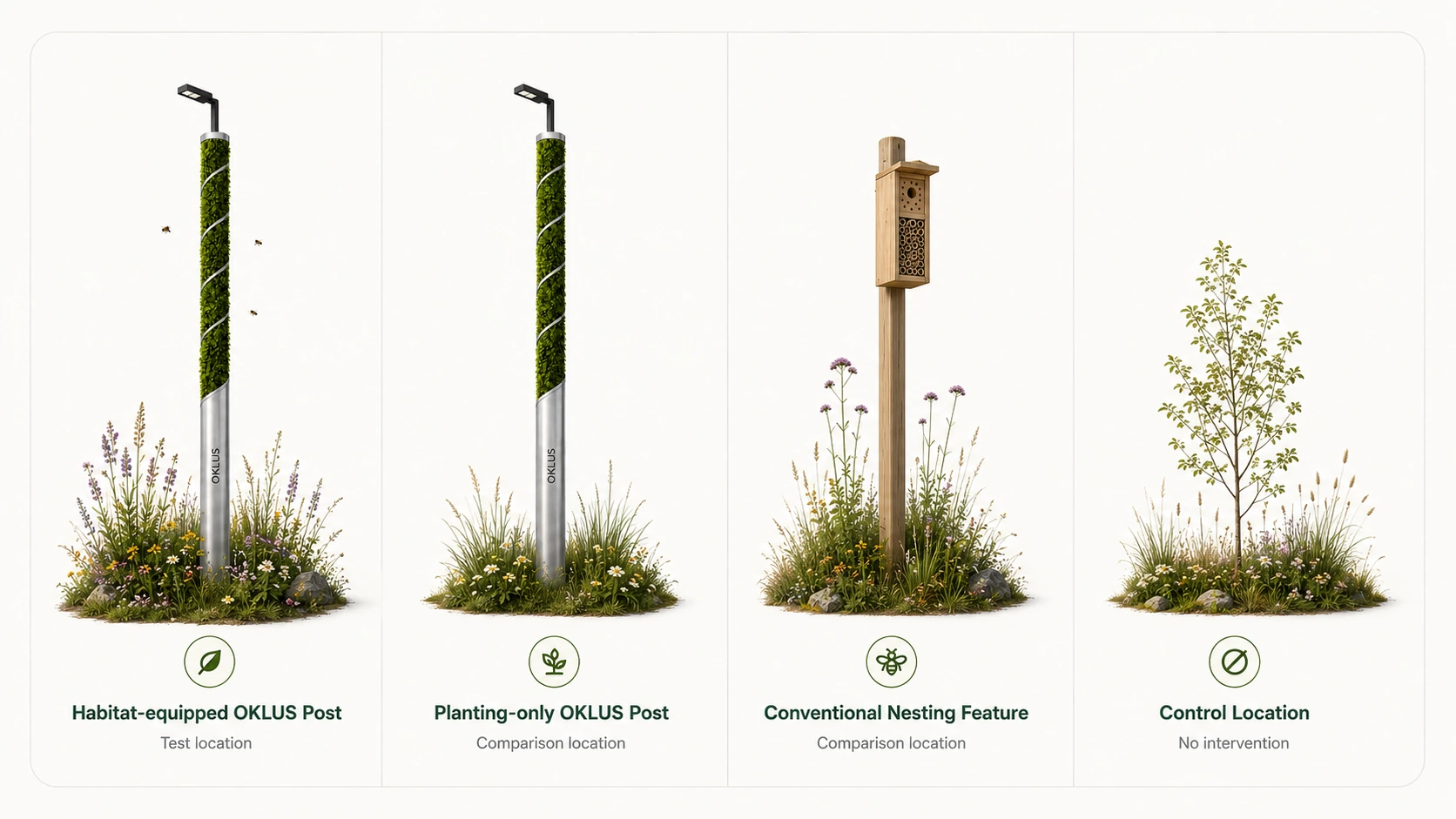
A PLATFORM FOR URBAN ECOLOGY RESEARCH
Repeated infrastructure can create useful comparative questions.
A network of selected installations could give researchers repeated physical locations across different urban environments.
Individual sites could be configured or observed differently, creating opportunities to compare habitat approaches, planting, lighting conditions, spacing, urban versus suburban settings, pollution gradients and seasonal microclimate.
Explore a research partnershipFROM HABITAT TO EVIDENCE
A biodiversity pilot should create a usable record.
Where appropriate, OKLUS installations could form part of an evidence network combining physical habitat interventions with structured observations and environmental data.
The fields below are future pilot-support concepts, not a claim that automated species detection or a live biodiversity platform currently exists.
Habitat module IDLocation and routeHabitat typeInstallation dateInspection historyTemperatureHumidityLighting contextPlanting contextOccupancy observationsPhotographsResearch notesMaintenance actionsSeasonal comparisonPilot decision
MORE VALUE FROM EXISTING INFRASTRUCTURE
One physical platform. Several council questions to explore.
A suitable street-light column already has a location, footprint and maintenance context.
OKLUS explores whether that existing infrastructure could support additional environmental functions without requiring a completely separate piece of street furniture.
Local Nature Recovery Strategies: OKLUS could be explored alongside wider LNRS work to investigate whether existing street infrastructure can contribute to networks of urban habitat and ecological connectivity. This does not mean an installation automatically satisfies an LNRS objective or statutory requirement.
MISSION EARTH: POLLINATOR ROUTES
Engineering for nature can become a real-world learning question.
Students could investigate which habitat approaches work best, how conditions differ between locations and how engineering can support nature within the built environment.
Explore OKLUS EducationBUILT FOR COLLABORATION
Urban biodiversity is a shared research challenge.
OKLUS is interested in working with councils, universities, ecologists, conservation organisations and funding partners to test how existing street infrastructure could contribute to healthier urban ecosystems.
Place and asset partners
Route context, permissions, local objectives and public-realm decision making.
Research and interpretation
Method design, comparative studies, analysis and independent evaluation.
Species and habitat safeguards
Target groups, siting, survey methods, maintenance rules and avoidance of harm.
Nature recovery expertise
Habitat context, connectivity questions and practical urban ecology insight.
Research and innovation pathways
Support for defined pilots where programme criteria, partners and evidence needs align.
FUTURE PILOT PROPOSITION
OKLUS Urban Insect Corridor Pilot.
A future research pilot could investigate whether a distributed set of suitable street-light locations can create useful biodiversity stepping stones.
Illustrative pilot scale: 20 to 100 suitable locations, subject to ecological review, asset feasibility, funding and research design.
Habitat and control sitesEcological baselineLighting assessmentEnvironmental observationsPlanting where appropriateUniversity involvementCouncil involvementIndependent ecological evaluation12 to 24 month study conceptPublic reporting
Help test the future of urban biodiversity infrastructure.Discuss a biodiversity pilot
COMMON QUESTIONS
Clear answers before any ecological pilot.
These answers describe the current development position. Site-specific decisions require appropriate ecological and technical review.
Is OKLUS a bee hotel?
No. The biodiversity concept is being developed as a measurable urban insect microhabitat rather than a decorative bug hotel. Future research would connect habitat design and environmental conditions with biological use, subject to ecology, site suitability and pilot validation.
Does every OKLUS unit contain an insect habitat?
No. Habitat modules would only be considered in suitable locations and configurations.
Can street lighting harm insects?
Yes, artificial lighting can affect some insect species. Lighting intensity, spectrum, shielding, habitat position and species suitability should therefore form part of the evaluation process.
Which insects could benefit?
Potential research groups include solitary bees, hoverflies, beetles, lacewings, ladybirds and other beneficial invertebrates. Suitability varies by species, habitat design and location.
Has OKLUS proven that it increases biodiversity?
Not yet. The biodiversity capability is a development-stage concept intended for scientific testing and controlled pilot deployment.
Could OKLUS form an insect corridor?
Potentially. The hypothesis is that suitable installations could act as small habitat stepping stones between existing areas of urban nature. Ecological testing is required before conclusions can be drawn.
Could universities research the system?
Yes. OKLUS is particularly interested in research partnerships involving urban ecology, entomology, environmental science, engineering, materials science and environmental monitoring.
Could councils use this alongside nature recovery programmes?
Potentially. OKLUS could be explored alongside wider council biodiversity, urban greening and Local Nature Recovery Strategy objectives, subject to local ecological assessment and programme requirements.
Does this count towards Biodiversity Net Gain?
No automatic claim should be made. Any role within formal Biodiversity Net Gain requirements would need assessment under the applicable statutory framework and appropriate ecological evidence.
CURRENT DEVELOPMENT POSITION
More connected nature, built into the same infrastructure.
Biodiversity features shown are under development. Habitat suitability and ecological benefit will depend on species, location, lighting, surrounding habitat, maintenance and other environmental conditions. Ecological performance claims will be based on future field evaluation and independent evidence.