Clear structure
Pages use descriptive headings, meaningful link labels and consistent navigation to make content easier to scan and understand.
ACCESSIBILITY STATEMENT
Our current approach to website accessibility, known limitations and the standards we want future OKLUS pilot information and interfaces to follow.
OUR APPROACH
OKLUS is an early-stage company. This website is developing alongside the product, pilot programme and future dashboard concept. We aim to make information clear, navigable and usable across a wide range of devices and access needs.
We use the Web Content Accessibility Guidelines 2.2 AA principles as a practical design target. This website has not yet completed an independent accessibility audit, so we do not claim that every page or component is fully conformant.
Last reviewed: 19 July 2026
PRACTICAL COMMITMENTS
These are working commitments rather than a claim of perfection. Feedback and testing will shape the next improvements.
Pages use descriptive headings, meaningful link labels and consistent navigation to make content easier to scan and understand.
Core navigation, links and interactive controls should remain reachable without relying on a mouse or touch input.
We aim for strong contrast, responsive layouts, scalable text and language that avoids unnecessary technical complexity.
Decorative animation is reduced when a device requests reduced motion, while essential information remains available without animation.
We have designed the current direct pages with responsive layouts, visible focus states, semantic headings, descriptive image alternatives and reduced-motion support. We also review colour contrast and text legibility as pages are added.
Because the website uses WordPress, Avada and an evolving OKLUS interface layer, some inherited components may behave differently across browsers, assistive technologies and device settings. A formal audit remains an open action before we make a stronger conformance statement.
You should be able to zoom text and page content, navigate primary links by keyboard, use common screen-reader landmarks and understand the main purpose of each page without relying only on colour or animation.
Most modern browsers also provide controls for text size, page zoom, contrast preferences, reader modes and motion reduction. These settings may improve the experience while we continue testing the site.
Some photographic content may contain complex visual detail even where a dark overlay is used. The Ask OKLUS assistant is custom-built and needs further testing with screen readers, voice control, keyboard-only navigation and smaller mobile displays. Some downloadable resources may also require further document-accessibility review.
Animated gradient headings are decorative. They should remain readable as text, and motion is disabled for users who request reduced motion. We are continuing to check focus order, menu behaviour, form labelling and contrast when site software changes.
Links may lead to external websites, documents or services that OKLUS does not control. Their accessibility can vary and is governed by the relevant provider.
If a third-party format prevents access to information that OKLUS has supplied, contact us and we will try to provide the same information in a more suitable format where reasonably possible.
The app and dashboard shown on this website are future pilot-support concepts. Accessibility requirements would need to be included in discovery, procurement, interface design, user testing, content governance and support arrangements before any live public service is introduced.
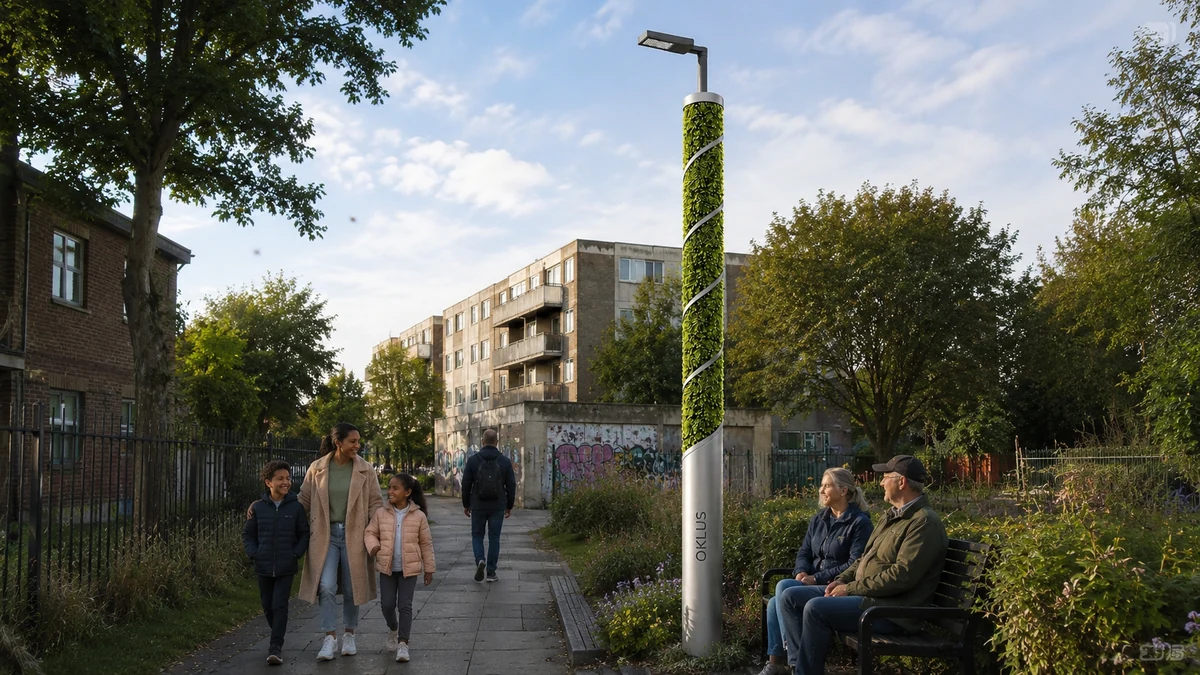
For physical routes, accessibility also means protecting clear footway space, visibility, desire lines, tactile paving, maintenance access and the needs of people with different mobility, sensory and cognitive requirements. Suitability would need to be assessed site by site with the relevant authority.
Email hello@oklus.com with the subject “Accessibility feedback”. Please tell us which page or feature caused difficulty, what device or assistive technology you were using, and the format or adjustment that would help.
We will acknowledge useful feedback and use it to prioritise practical fixes. You can also write to OKLUS Ltd, 15 Neptune Court, Vanguard Way, Cardiff, CF24 5PJ.
NEXT VALIDATION
The next meaningful step is structured testing with keyboard users, screen-reader users, people who magnify content and people who experience cognitive or sensory barriers.

FOUND A BARRIER?
Clear examples help us understand the problem and prioritise a practical repair.
Email accessibility feedback